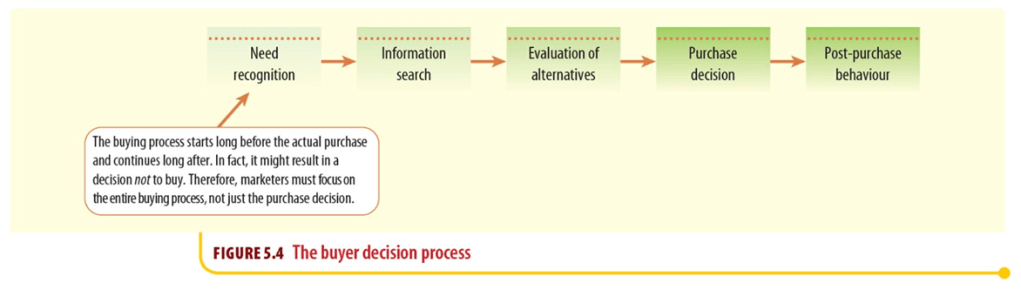
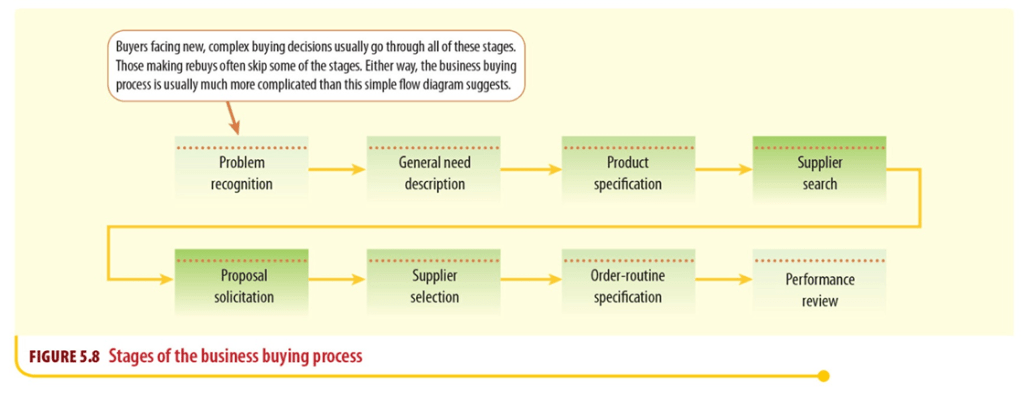
Commercial and personal information play a crucial role in educating consumers and businesses about a particular product. Neither consumers or businesses will be willing to purchase a product they have very little knowledge of. There are models associated with predicting the behaviours and attitudes of consumers and businesses. The consumer decision process model involves a series of steps that look at how consumers make decisions. The steps involved in the process include the need for recognition, information search, evaluation of alternatives, purchase decision and post purchase behaviour (Armstrong, Adam, Denize, Volkov, Kotler, 2019). The business buyer process model is more complex with more steps involved. The steps included within the model are as follows problem recognition, general need description, product specification, supplier search, proposal solicitation, supplier selection, order-routine specification and performance review (Armstrong, Adam, Denize, Volkov, Kotler, 2019).
In the more recent times the most prevalent source of information associated with products would be the internet and social media sites. Social media is an appropriate outlet that many organisations use to promote and advertise goods and services. From Instagram to Facebook there are a multitude of sites that businesses can utilise to promote their goods and services. The marketing plan will encourage Red Cross to utilise social media as a source of information to influence consumers to get involved with their cause.

References: Armstrong, G. Adam, S. Denize, S. Volkov, M. Kotler, P. (2019). Principles of Marketing. Melbourne, Victoria. Pearson Australia.
 Curtis' Blog